Is Chongqing Worth Visiting? An Honest Answer for 2026
What makes Chongqing worth the trip, who will love it, who may find it exhausting, and how to test the city in two days.
- Best for
- Urban drama
- Minimum stay
- 2 nights
- Ideal stay
- 3–4 nights
- Fitness
- Moderate
On this page
The short answer
Yes, if you want a city that feels physically different from anywhere else in China. Chongqing delivers vertical streets, river crossings, a monorail through a building, serious food and one of the most theatrical night skylines in the country.
The tradeoff is effort. The city is hot in summer, hilly everywhere and often crowded at the exact viewpoints people come to see. Travelers who want a flat, quiet, museum-led city may prefer Chengdu or Suzhou.
What makes it distinct
Chongqing is a mountain city built around two rivers. Roads stack above each other. A shopping mall can have an entrance on one street and a roof plaza on another. The metro crosses the river on bridges and passes through apartment blocks.
That geography produces the images people recognize: Liziba’s monorail, Hongyadong’s stacked lights, the Yangtze cableway and the dense skyline on the peninsula. It also produces a travel experience that is more physical than a typical city break.
The food is another reason to come. Chongqing hotpot is a social event built around beef tallow, chili and numbing pepper. Xiaomian turns breakfast into a five-minute bowl at a plastic stool. The street food is cheap, fast and designed for people moving between shifts.
Who will love it
- Travelers who enjoy dense, cinematic cities.
- Photographers willing to go out at blue hour.
- Food travelers who want heat, texture and a local rhythm.
- Repeat visitors to China looking for a place that feels new.
- Travelers comfortable using metro maps and translation apps.
Who may find it hard
- Travelers with limited mobility who need step-free routes at every stop.
- People who dislike heat, humidity and crowds.
- Visitors who want a calm, walkable old town with uniform signage.
- Families with very young children during holiday periods.
Chongqing can still work for these groups, but the itinerary needs shorter days, more taxis and a base close to the river.
The two-day test
If you are unsure, give the city two nights.
Day one: Liziba in the late afternoon, Eling Park for the view, dinner near Jiefangbei, then Hongyadong after dark.
Day two: the cableway early, Nanbin Road for the skyline, a long lunch, then Shibati or Kuixinglou in the afternoon. Finish with hotpot.
If that sequence feels exciting, add a third night. If the stairs and crowds feel like a chore, Chengdu is an easy rail connection and a softer landing.
When to go
Spring and autumn are the best windows. March to May brings green hills and comfortable evenings. September to November usually has clearer air and better walking weather.
Summer is manageable with a split schedule: outdoor sights before 10:00 and after 18:00, air-conditioned meals and museums in between. Winter is grey and cool, but the hotpot and night views still work.
How it compares with Chengdu
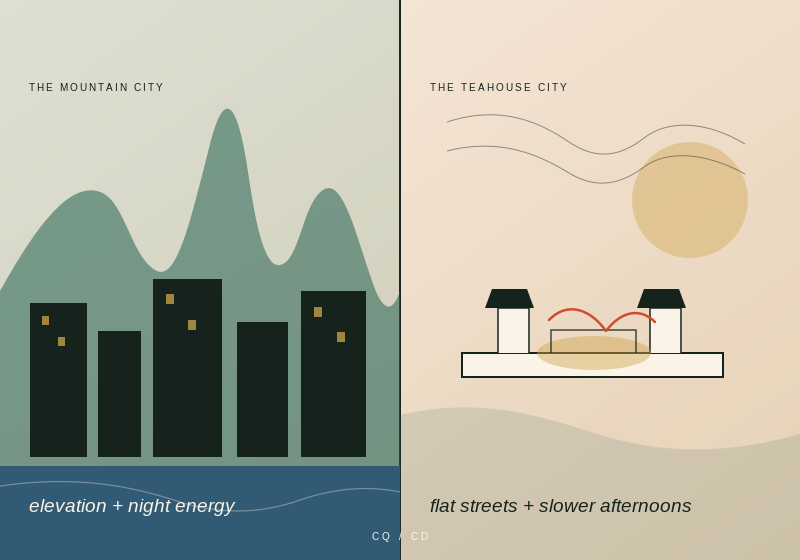
Chengdu is flatter, slower and easier to navigate on foot. It has teahouses, pandas, a strong restaurant scene and a more relaxed street rhythm. Chongqing is more dramatic and more demanding. The two cities are about 1–1.5 hours apart by high-speed rail, so many travelers combine them.
Choose Chongqing first if you want the visual shock and the river. Choose Chengdu first if you want an easier introduction to Sichuan food and a slower pace.
The honest verdict
Chongqing is worth visiting for its geography alone. The city does not feel like a themed attraction. It feels like a working metropolis that happened to be built on a mountain, and the best experiences come from moving through it with a little patience.
Give it three nights, stay central, and leave one evening unscheduled for the river.
Five phrases for this stop
Photo spots that work
FAQ
Is two days enough for Chongqing?
Two nights covers the central highlights if you plan by district. Three nights gives you time for a slower meal and one neighborhood outside the core.
Is Chongqing better than Chengdu?
They offer different trips. Chongqing is more vertical, dramatic and fast-moving. Chengdu is flatter, slower and easier for a relaxed food-and-teahouse visit.
Is Chongqing good in summer?
Summer is hot and humid. The city works if you plan outdoor time for early morning and evening and use air-conditioned breaks in the middle of the day.